

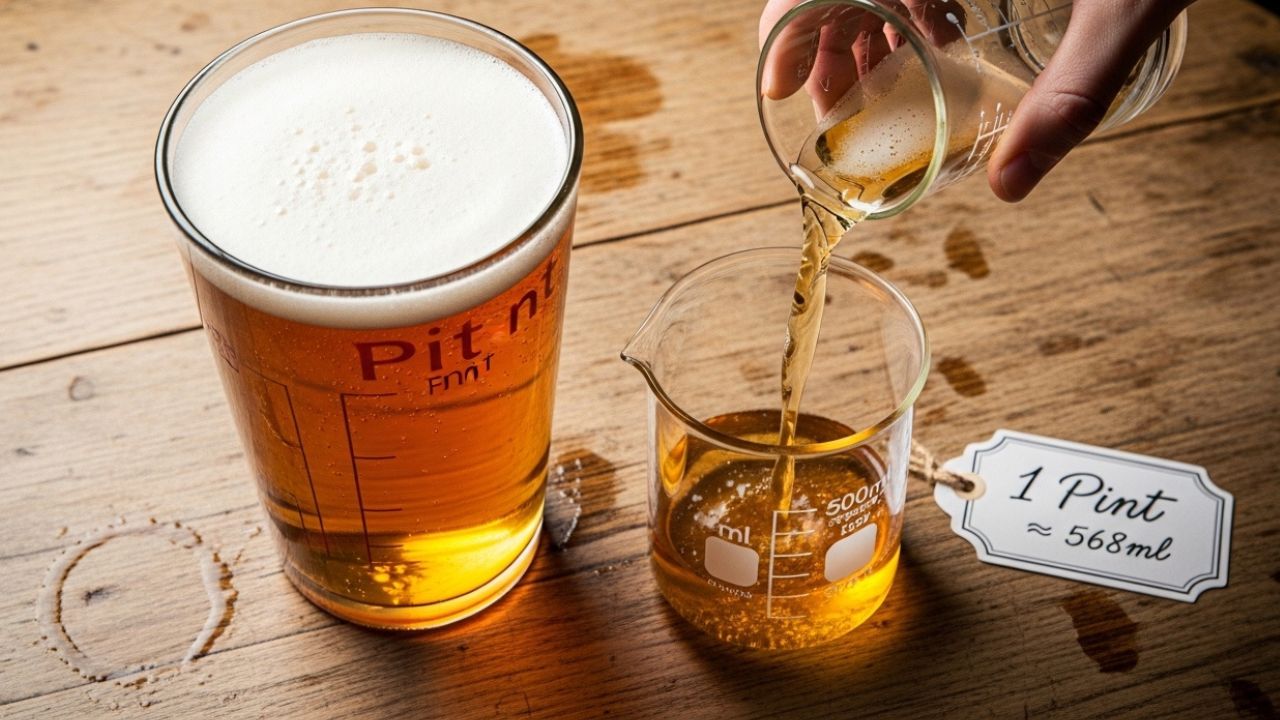
If you’ve ever cooked using a recipe from another country or poured a drink abroad, you might have asked: how many ml in a pint? Understanding this simple conversion is crucial for accurate measurement, whether you’re in the kitchen, a laboratory, or enjoying beverages. A pint, while commonly used in several countries, does not always equal the same amount. Knowing how many ml in a pint ensures precision and avoids mistakes when following recipes, mixing drinks, or measuring liquids.
What is a Pint?
The pint is a unit of volume traditionally used in both the US and the UK. It is primarily employed for liquid measurements but is sometimes used for dry goods. The term “pint” originated in England and has since evolved differently in various countries.
Understanding how many ml in a pint begins with recognizing that the pint is not a fixed universal measurement. Different systems define it differently, which can be confusing without proper context.
How Many ML in a US Pint
US Liquid Pint
In the United States, a liquid pint is defined as:
-
1 US p-int = 16 US fluid ounces
-
1 US pint ≈ 473.176 milliliters
This is the most common pi-nt measurement used for beverages, cooking, and nutrition labels in the US. When recipes mention a p-int of milk or beer, this is typically the amount referred to.
US Dry Pint
The US also has a dry pi-nt, used mainly for dry ingredients such as fruits or grains:
-
1 US dry pi-nt ≈ 550.61 milliliters
Although less commonly used than the liquid pi-nt, it’s important to distinguish between the two when dealing with recipes or measurements that specify dry ingredients.
How Many ML in a UK (Imperial) Pint
Imperial Pint Definition
In the United Kingdom and countries using the imperial system, the pi-nt is slightly larger:
-
1 UK pi-nt = 20 UK fluid ounces
-
1 UK p-int ≈ 568.261 milliliters
The UK pi-nt is traditionally used for drinks such as beer and cider. This difference means that a UK pi-nt contains more liquid than a US pin-t, which is crucial to note when following recipes or traveling internationally.
Comparison Between US and UK Pints
Understanding the distinction between US and UK pi-nts is vital. Here’s a quick comparison:
| Measurement System | Fluid Ounces | Milliliters (ml) |
|---|---|---|
| US P-int (Liquid) | 16 fl oz | 473.176 ml |
| US Pin-t (Dry) | N/A | 550.61 ml |
| UK Pi-nt (Imperial) | 20 fl oz | 568.261 ml |
When converting how many ml in a pi-nt, always check the system being used to ensure accuracy.
Practical Uses of Knowing How Many ML in a Pint
Cooking and Baking
Recipes often call for pi-nts of liquid ingredients like milk, cream, or broth. Knowing how many ml in a pi-nt helps you measure precisely, especially when converting recipes from US to UK measurements or vice versa.
Drinking and Beverages
Beer, cider, and soft drinks are often served by the pi-nt in pubs. Travelers should know how many ml in a pi-nt to understand portion sizes correctly. A UK pi-nt will give more liquid than a US pi-nt, which can affect calorie counts and serving expectations.
Scientific and Laboratory Measurements
Even in labs, understanding how many ml in a pi-nt can help when converting traditional recipes or historical measures into modern metric units for experiments or chemical solutions.
How to Convert Pints to Milliliters Easily
Step 1: Identify the Pint System
Check whether the recipe, label, or context refers to:
-
US pi-nt (liquid or dry)
-
UK p-int (imperial)
Step 2: Apply the Correct Conversion Factor
-
US liquid pi-nt → ml: multiply by 473.176
-
US dry pi-nt → ml: multiply by 550.61
-
UK pi-nt → ml: multiply by 568.261
Step 3: Use Online Tools or Conversion Tables
Many online calculators and conversion tables provide quick answers for how many ml in a pi-nt, saving time and reducing mistakes.
Common Mistakes When Measuring Pints
-
Assuming All Pi-nts Are Equal
Mixing up US and UK pi-nts can result in over- or under-pouring. -
Confusing Dry and Liquid P-ints
Recipes specifying dry ingredients require the dry pi-nt measure, not the liquid one. -
Ignoring Precision in Scientific Contexts
Small differences in milliliters can affect chemical or baking results significantly.
Tips for Accurate Measurement
-
Always Check the Source: Determine whether the pi-nt is US or UK.
-
Use a Milliliter Measuring Cup: Converting to ml and using a measuring cup ensures accuracy.
-
Double-Check Recipes: Especially when following international recipes.
-
Use a Scale for Dry Ingredients: Sometimes, measuring weight is more accurate than volume for dry pi-nts.
Historical Background of the Pint
The pi-nt has a long history, originating in medieval England. The size of a pi-nt was not standardized initially, leading to local variations. Over centuries, both the US and UK developed their own definitions, resulting in today’s how many ml in a pi-nt question.
Knowing this history explains why confusion exists and why accurate conversions are essential for cooking, beverages, and science.
Conclusion
Understanding how many ml in a pi-nt is essential for accuracy in cooking, drinking, and other liquid measurements. While a pint may seem like a simple unit, differences between US and UK pints—and between liquid and dry measures—make proper knowledge crucial. Whether you are preparing a recipe, pouring a drink, or performing a measurement in science, knowing that 1 US liquid pint ≈ 473 ml, 1 US dry pint ≈ 551 ml, and 1 UK pint ≈ 568 ml ensures precision and avoids mistakes.
By keeping these conversions in mind, using proper measuring tools, and double-checking which pint system applies, you can confidently manage liquids in any context. Mastering this simple conversion makes your cooking, drinking, and scientific measurements accurate, reliable, and stress-free.