
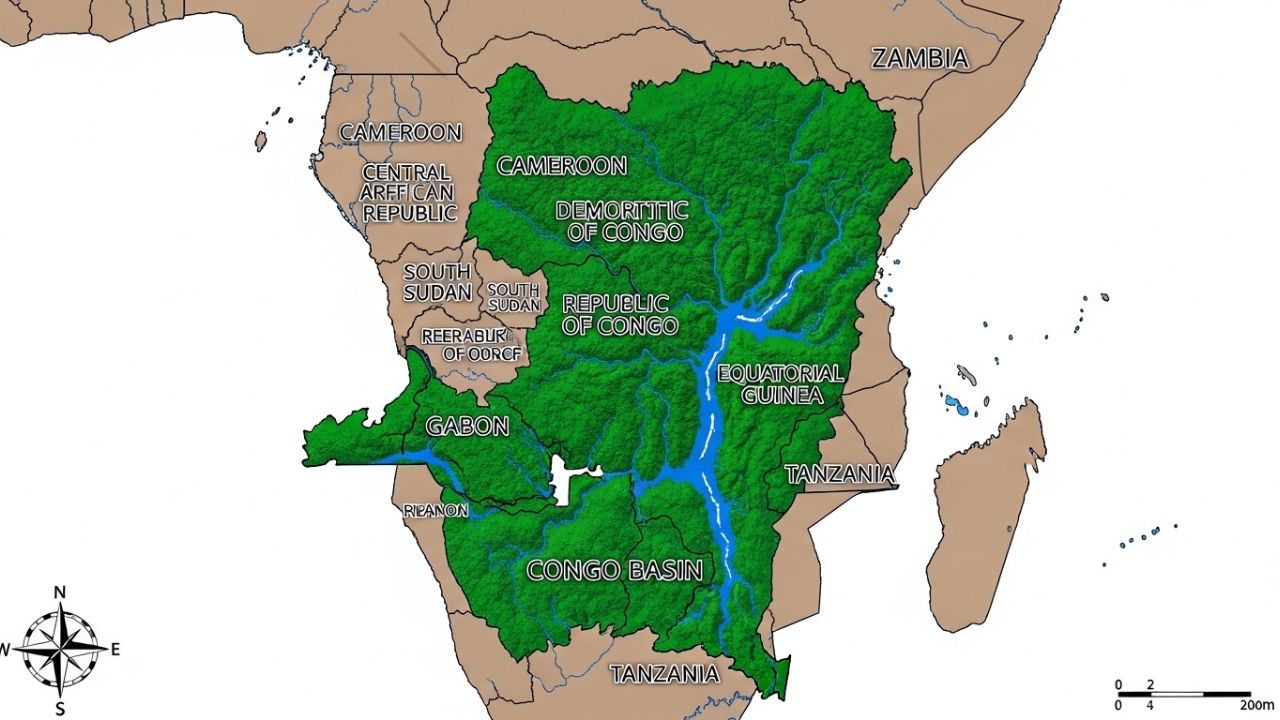
he Congo Basin is one of the largest and most biologically diverse regions in the world, primarily located in Central Africa. Home to the Amazon rainforest, this area is essential for global biodiversity, housing thousands of plant and animal species. The Congo Basin is shared by several countries, each contributing to the richness and complexity of this vital ecosystem. This article explores the countries in the Congo Basin, their significance, ecological challenges, and conservation efforts.
Overview of the Congo Basin
Geographic Significance
The Congo Basin encompasses approximately 3.7 million square kilometers and is the second-largest rainforest area on the planet, following the Amazon. The basin is drained by the Congo River, the second-longest river in Africa, which plays a crucial role in the region’s ecology, economy, and culture.
Importance of Biodiversity
The Congo Basin is known for its vast biodiversity. It is home to diverse flora, including numerous tree species, and fauna such as the endangered mountain gorilla, African elephants, and a variety of birds and reptiles. This biodiversity is vital for ecological balance and plays a significant role in global climate regulation.
Countries in the Congo Basin
The Congo Basin is shared by six primary countries. Each country has its unique attributes and contributions to the basin’s ecology.
1. Democratic Republic of the Congo (DRC)
The Democratic Republic of the Congo is the largest country in the Congo Basin, covering about 2.3 million square kilometers. The DRC contains a significant portion of the basin’s rainforest, including Virunga National Park, a UNESCO World Heritage site known for its mountain gorillas.
Ecological Challenges
Despite its ecological wealth, the DRC faces numerous challenges, including deforestation, illegal logging, and poaching. These issues threaten both the wildlife and the livelihoods of the local communities that depend on the forest.
2. Republic of the Congo
The Republic of the Congo, often referred to as Congo-Brazzaville, is located to the west of the DRC and covers approximately 342,000 square kilometers. The country is home to pristine rainforests and various national parks, such as Odzala-Kokoua National Park, which is known for its biodiversity and conservation efforts.
Conservation Initiatives
The Republic of the Congo is actively working on conservation initiatives to protect its rainforest and wildlife. These include sustainable logging practices, anti-poaching measures, and ecotourism to promote awareness about the importance of biodiversity.
3. Gabon
Gabon is located on the western coast of Central Africa and covers about 267,668 square kilometers. Approximately 85% of Gabon’s land area is covered by rainforest, making it one of the most forested countries in the world.
Wealth of Biodiversity
Gabon is renowned for its rich wildlife, including elephants, gorillas, and a variety of bird species. The country has set aside over 10% of its territory for national parks, prioritizing conservation efforts to safeguard its unique ecosystems.
4. Cameroon
Cameroon, covering about 475,442 square kilometers, is characterized by diverse landscapes, including rainforests, mountains, and savannas. The country lies at the intersection of several ecological zones.
Ecological Significance
Cameroon’s rainforest is essential for biodiversity, hosting various species endemic to the region. However, like other countries in the basin, it faces threats from logging, agriculture, and infrastructure development. Conservation efforts are being made to protect these vital habitats.
5. Central African Republic (CAR)
The Central African Republic is home to significant portions of the Congo Basin, covering around 622,984 square kilometers. The CAR’s dense rainforests harbor diverse wildlife and are crucial for carbon sequestration.
Security and Conservation Challenges
The CAR faces security challenges that have hindered conservation efforts. Armed conflict has resulted in increased poaching and illegal logging. Despite these challenges, local and international organizations are working to promote peace and conservation in the region.
6. Equatorial Guinea
Equatorial Guinea is a small country on the west coast of Central Africa, covering about 28,051 square kilometers. The country has rich biodiversity, primarily concentrated on the islands of Bioko and the mainland.
Conservation Efforts
Despite its small size, Equatorial Guinea is significant for conservation efforts. The country has designated several protected areas and resorts to promote ecotourism while emphasizing the need for sustainable development.
Ecological Challenges in the Congo Basin
Deforestation
Deforestation is one of the most pressing issues facing the Congo Basin. The region is increasingly threatened by logging, agriculture, and mining activities. These practices not only harm wildlife habitats but also contribute to climate change.
Climate Change
Climate change poses significant risks to the Congo Basin, including altered rainfall patterns, increased temperatures, and more frequent droughts. These changes can exacerbate the vulnerabilities of biodiversity and local communities.
Illegal Activities
Poaching and illegal logging continue to threaten the rich wildlife and forest resources of the Congo Basin. Efforts are underway to combat these activities through stricter regulations, community engagement, and international cooperation.
Conservation Efforts in the Congo Basin
International Collaboration
Conservation in the Congo Basin often requires international collaboration. Various organizations, including the World Wildlife Fund (WWF) and the Wildlife Conservation Society (WCS), are actively engaged in preserving the region’s biodiversity through research, advocacy, and awareness campaigns.
Community Involvement
Engaging local communities in conservation efforts is essential for sustainable practices. Education and awareness programs help communities understand the importance of preserving biodiversity and sustainable resource management.
Ecotourism
Promoting ecotourism can benefit both conservation and local economies. Sustainable tourist practices generate revenue while raising awareness about the importance of rainforest preservation.
Conclusion
The countries in the Congo Basin play a vital role in global biodiversity and ecological balance. While facing numerous challenges, including deforestation and climate change, ongoing conservation efforts offer hope for preserving this unique region. Collaborative approaches that engage both local communities and international organizations are essential for safeguarding the future of the Congo Basin and its remarkable natural resources.
Frequently Asked Questions
1. What countries are included in the Congo Basin?
The Congo Basin primarily includes six countries: the Democratic Republic of the Congo, Republic of the Congo, Gabon, Cameroon, Central African Republic, and Equatorial Guinea.
2. Why is the Congo Basin important?
The Congo Basin is crucial for its vast biodiversity, serving as a vital habitat for countless plant and animal species. It plays a significant role in carbon sequestration, helping to combat climate change.
3. What are the main ecological challenges facing the Congo Basin?
Key challenges include deforestation, illegal logging, poaching, and the impacts of climate change, which threaten both wildlife and local communities.
4. How does deforestation affect the Congo Basin?
Deforestation disrupts ecosystems, reduces biodiversity, contributes to climate change, and endangers the livelihood of communities that depend on forests.
5. What conservation efforts are being made in the Congo Basin?
Various organizations are working on conservation initiatives, including establishing protected areas, promoting sustainable land use, and engaging local communities in conservation practices.
6. How can ecotourism contribute to conservation in the Congo Basin?
Ecotourism can provide revenue for local communities while promoting awareness of the importance of preserving the region’s natural resources and biodiversity.
7. What role do local communities play in conservation?
Local communities are integral to conservation efforts, as their involvement helps ensure sustainable practices and fosters stewardship of natural resources.
8. How does climate change impact the Congo Basin?
Climate change leads to altered rainfall patterns, higher temperatures, and more frequent extreme weather events, which threaten ecosystems and the livelihoods of local inhabitants.
9. What types of wildlife are found in the Congo Basin?
The Congo Basin is home to a diverse array of wildlife, including gorillas, elephants, leopards, and various bird species, as well as countless plant species.
10. Where can I find more information about conservation efforts in the Congo Basin?
Information can be found through various organizations, including the World Wildlife Fund (WWF), the Wildlife Conservation Society (WCS), and government wildlife agencies in the respective countries.