

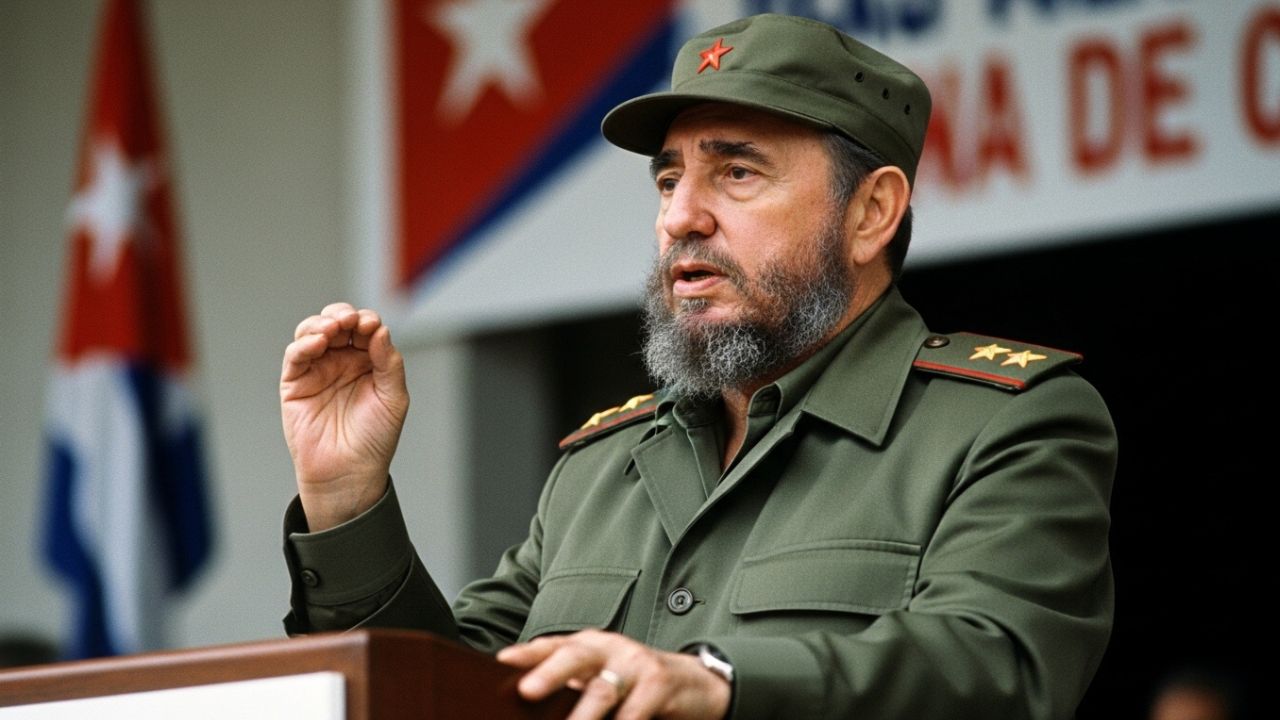
Fidel Castro (1926–2016) was a Cuban revolutionary, politician, and the long-time leader of Cuba. As the architect of the Cuban Revolution, Castro became a central figure in 20th-century geopolitics, challenging U.S. influence in Latin America and shaping Cuba’s socialist policies for decades.
Castro’s leadership left a lasting imprint on Cuban society, healthcare, education, and international relations. Understanding his life provides insight into both the revolutionary movements of the 20th century and the ongoing debates about his legacy.
Early Life and Education
Birth and Family Background
Fidel Alejandro Castro Ruz was born on August 13, 1926, in Birán, a small town in eastern Cuba. He came from a middle-class family; his father was a wealthy sugarcane farmer, and his upbringing gave him access to education and social networks that would later influence his political life.
Education and Early Activism
Castro attended Jesuit schools and later the University of Havana, where he studied law. During his university years, he became politically active, joining student protests against government corruption and U.S. influence in Cuba.
It was during this period that Castro began developing his revolutionary ideology, blending nationalism with socialist ideas inspired by global movements.
The Cuban Revolution
Opposition to Batista
In the 1950s, Castro emerged as a leader against the dictatorship of Fulgencio Batista, whose regime was marked by corruption and repression. Castro’s early attempts to overthrow Batista included the failed Moncada Barracks attack in 1953, which landed him in prison but increased his national prominence.
Guerrilla Warfare in the Sierra Maestra
After being released from prison, Castro fled to Mexico, where he organized a revolutionary movement with allies like Che Guevara and Raúl Castro. In 1956, they returned to Cuba and began a guerrilla campaign in the Sierra Maestra mountains, gradually gaining support from peasants and urban populations disillusioned with Batista.
Victory and Rise to Power
By January 1, 1959, Batista had fled Cuba, and Castro’s forces entered Havana. Castro became prime minister in 1959 and later consolidated power as president and head of the Communist Party. His rise marked the beginning of a socialist Cuba closely allied with the Soviet Union.
Political Leadership and Policies
Social Reforms
Castro implemented widespread social reforms, including:
-
Healthcare: Establishing free healthcare accessible to all citizens.
-
Education: Launching literacy campaigns and expanding public education.
-
Land Reform: Redistributing land from wealthy landowners to peasants.
These policies aimed to reduce inequality and promote social welfare but often drew criticism for limiting private enterprise and political freedoms.
Economic and International Policies
Castro nationalized industries, including sugar and utilities, and established a centrally planned economy. He aligned Cuba with the Soviet Union, which led to economic and military support but also heightened tensions with the United States.
Relations with the United States
Castro’s rise triggered a series of conflicts with the U.S., including the Bay of Pigs invasion (1961) and the Cuban Missile Crisis (1962), which brought the world close to nuclear war. Despite these challenges, Castro maintained his leadership and positioned Cuba as a symbol of resistance against U.S. influence in Latin America.
Legacy of Fidel Castro
Achievements
-
Healthcare and Education: Cuba achieved high literacy rates and advanced medical care relative to its economic situation.
-
Political Symbol: Castro became a symbol of anti-imperialism and revolutionary struggle worldwide.
-
Cultural Influence: Castro’s Cuba influenced socialist movements and political thought in Latin America and beyond.
Controversies
-
Human Rights: Castro’s regime has been criticized for censorship, political repression, and imprisonment of dissidents.
-
Economic Challenges: Centralized planning and U.S. sanctions led to chronic shortages and economic stagnation.
-
Exile and Migration: Hundreds of thousands of Cubans fled the country seeking political freedom or economic opportunity.
Death and Succession
Fidel Castro stepped down as president in 2008 due to health issues, transferring power to his brother, Raúl Castro. Fidel died on November 25, 2016, at the age of 90, leaving behind a complex and polarizing legacy.
Global Impact
Influence on Latin America
Castro inspired revolutionary movements across Latin America, supporting leftist leaders and guerilla movements. His foreign policy emphasized solidarity with oppressed nations and resistance to imperialism.
Cold War Symbolism
Cuba under Castro became a key player in the Cold War, representing socialist ideology in the Western Hemisphere. The country’s survival despite U.S. embargoes highlighted the geopolitical complexities of the era.
Cultural Legacy
Castro remains a figure in global popular culture, depicted in films, documentaries, books, and music, representing both revolution and controversy.
Conclusion
Fidel Castro was a transformative figure in 20th-century history. His leadership of Cuba reshaped the country politically, socially, and economically, leaving achievements in healthcare and education alongside criticisms for authoritarian governance.
Understanding Castro’s life, policies, and global influence is essential for anyone studying Latin American history, Cold War politics, or revolutionary movements. His legacy continues to provoke debate, reflecting both admiration and controversy in Cuba and around the world.